


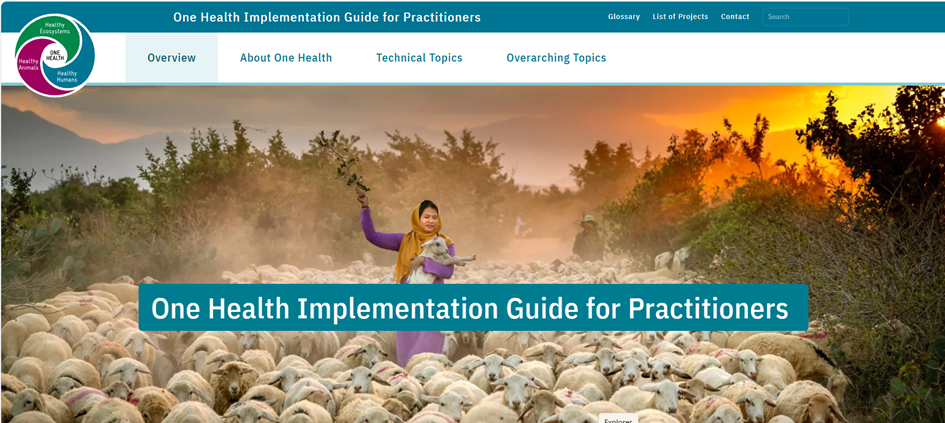
The One Health Implementation Guide for Practitioners from the GIZ
One Health recognizes the close interconnection between human, animal, and ecosystem health. Challenges such as zoonoses, antimicrobial resistance (AMR), climate change, biodiversity loss, and food safety can be better addressed through the One Health approach when different disciplines and sectors work together.
But how can the One Health approach be applied in practice? This question is addressed by the One Health Implementation Guide for Practitioners, which was developed by the German Society for International Cooperation (GIZ), specifically the "Sektorvorhaben One Health" (G110).
What does it contain?
It is a practice-oriented guide designed to support project managers in implementing the One Health approach in development projects. It draws on experiences from GIZ projects around the world and was developed in close collaboration with staff from GIZ projects to systematically document existing knowledge and practical experience and make it accessible to other project teams. It is structured as a collection of standalone modules that can be used independently of one another. The individual subject areas are divided into “Technical Topics” and “Overarching Topics.” They include, among other things, technical explanations, references to scientific sources, practical project experience, and examples.
Who does it help?
The primary target groups are project planners, project managers, and professionals who design and implement development projects and wish to integrate the One Health approach into their work.
The guide can be used at various stages of project work—from planning and implementation to the further development of existing measures.
For more information, visit: https://onehealth-implementation-guide.org/