


3 days, 383 participants, 13 thematic sessions, 22 nations, 5 high-profile keynote speeches – these are the figures for the One Health Platform’s International One Health Symposium 2026 in Berlin. The event focused on new research findings, cross-disciplinary exchange and further networking to build a strong One Health community in Germany and beyond. Exciting insights came this year from Latin America, the focus region of the 2026 symposium.
Seizing opportunities for One Health
The International One Health Symposium brings together researchers from various disciplines in Berlin every year for professional exchange. The 2026 event was opened by Sascha Knauf, Head of the Institute for International Animal Health/One Health at the Friedrich-Loeffler-Institut and Site Manager of the One Health Platform (OHP) on the island of Riems. He urged those present not to overlook the opportunities on offer in the face of numerous global challenges. The OHP, he said, was one such opportunity. To fully realise its potential, he added, the commitment of every individual to this community-driven structure was crucial. Georg Kippels, Parliamentary State Secretary at the Ministry of Health, who delivered the welcoming address on behalf of the six ministries supporting the OHP, also emphasised the importance of a strong and vibrant One Health research community that continuously delivers key insights into some of the most pressing issues of our time, and expressed his gratitude for the contributions made by those present.
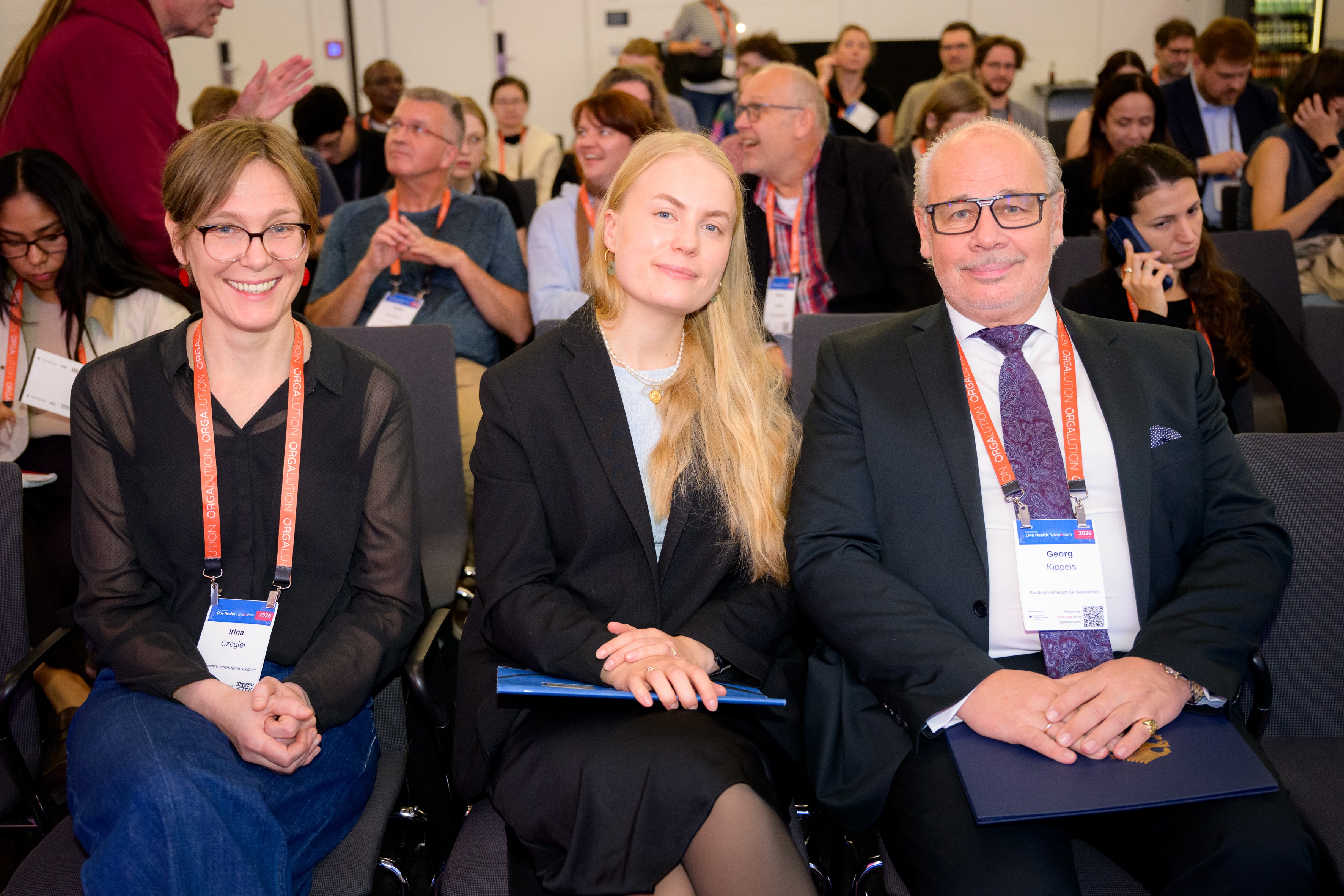 | 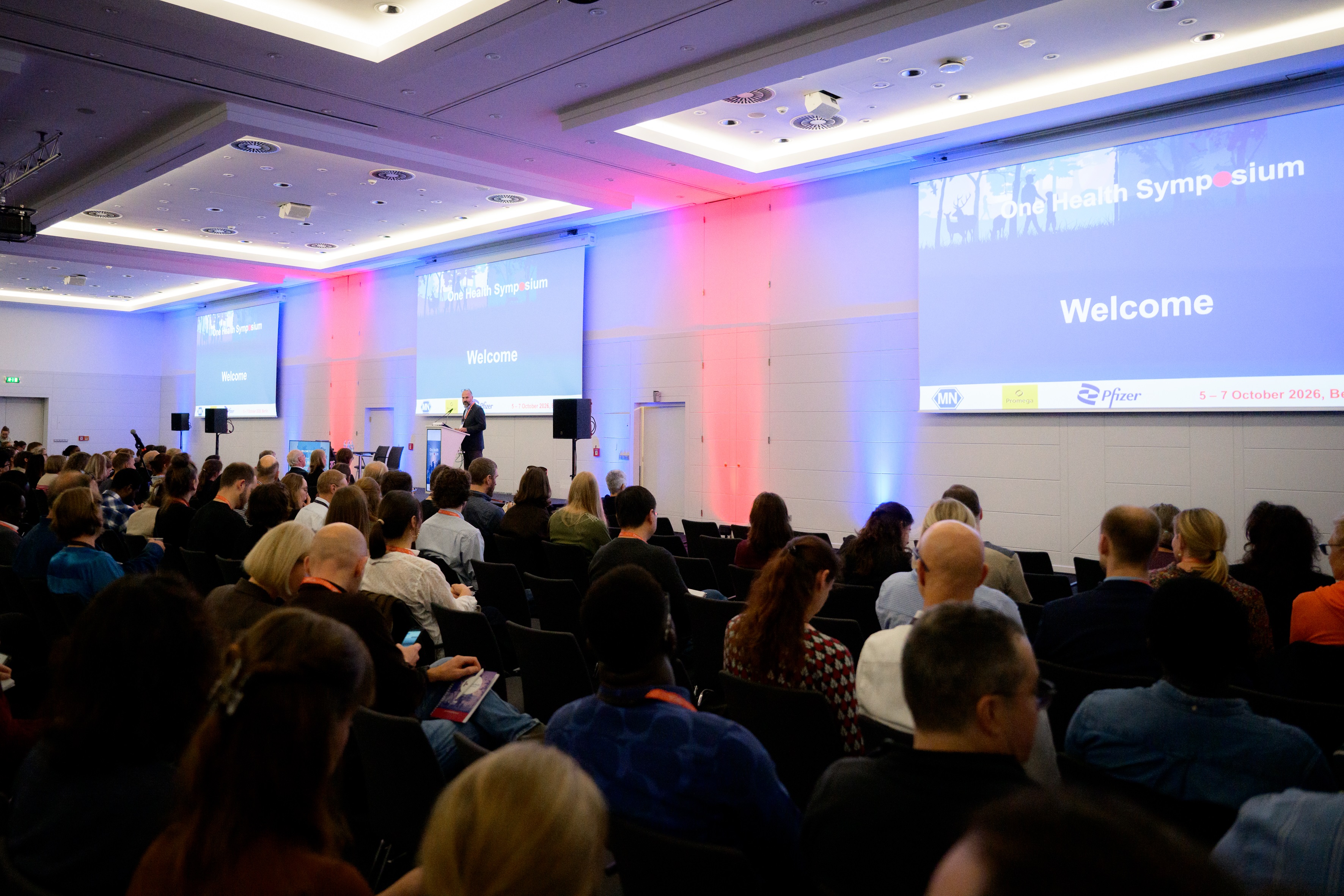 |
Georg Kippels (right), Parliamentary State Secretary at the Ministry of Health, and Irina Czogiel (left, BMG) at the opening of the symposium in Berlin | Sascha Knauf (One Health Platform/ Friederich-Loeffler-Institut) welcomed all participants at the opening of the symposium in Berlin |
One Health in Brazil
The symposium was opened by David Soeiro Barbosa, President of One Health in Brazil
One Health in Brazil
The symposium was opened by David Soeiro Barbosa, President of ABRASUNI, a Brazilian One Health association. He outlined how One Health could be linked to climate policy in order to take planetary crises into account in health policy and to generate synergies between the sectors. Mayumi D. Wakimoto contributed a further perspective from Brazil to the symposium. She presented the Fiocruz One Health Translational Research Network.
H5N1 – the virus’s rampage in Argentina
Agustina Rimondi provided a South American perspective on the global spread of the H5N1 subtype of avian influenza. The researcher, who currently works at the Robert Koch Institute, was involved in establishing a One Health network to monitor the H5N1 pathogen in Argentina. She traced the virus’s route via wild birds from North America to Argentina. , infections were observed in Argentina in both waterbirds and marine mammals (e.g. sea lions), as well as cross-species transmission. The virus persists in the host populations, and reassortants have also been found in poultry flocks across the country. Ms Rimondi emphasised that the One Health approach is essential for understanding and managing H5N1 transmission chains.
Exchange of knowledge and experience
The symposium’s thematic sessions covered vector-borne diseases as well as new and emerging diseases, pandemic prevention, climate change, environmental pollution, public health, education and implementation strategies, biodiversity, food systems, antimicrobial resistance, and vaccines and the immune system. The wealth of topics provided ample scope for interdisciplinary knowledge exchange and discussions.
Knowledge exchange and discussions were also the focus of the One Health Career get-together, which took place on the second day of the symposium. However, the discussion here centred not only on specialist topics but also on career development and the professional trajectories of early-career researchers. The accessible format offered 30 early-career researchers the opportunity to exchange ideas with established researchers and ask them about their personal experiences and advice. The event was very well received, and an hour of fascinating conversations flew by.
Current research
The second day featured two further highlights. Firstly, the collaborative projects recently launched under the umbrella of the One Health Platform presented their work on the topic of ‘Pandemic prevention and control within the framework of the “One Health” concept’. Secondly, Martin Beer, Head of the Institute for Virus Diagnostics at the Friedrich-Loeffler-Institute, provided an up-to-date overview of the Shamonda virus, which has recently emerged in Germany (for more details, see our podcast episode on the subject).
Wanda Markotter, Co-Chair of the One Health High Level Expert Panel (OHHLEO) and Director of the Centre for Viral Zoonoses at the University of Pretoria, concluded the official programme of the second day with a presentation on the current activities of OHHLEP, as well as an intriguing insight into her team’s research on viruses in bats in Africa and their complex interrelationships with environmental factors. She emphasised the importance of longitudinal studies for such research questions.
This was followed by a general meeting of the OHP, during which the Scientific Advisory Board for 2027 was elected. The second day concluded with a group dinner, which drew to a close with good conversation and the odd game of table tennis.
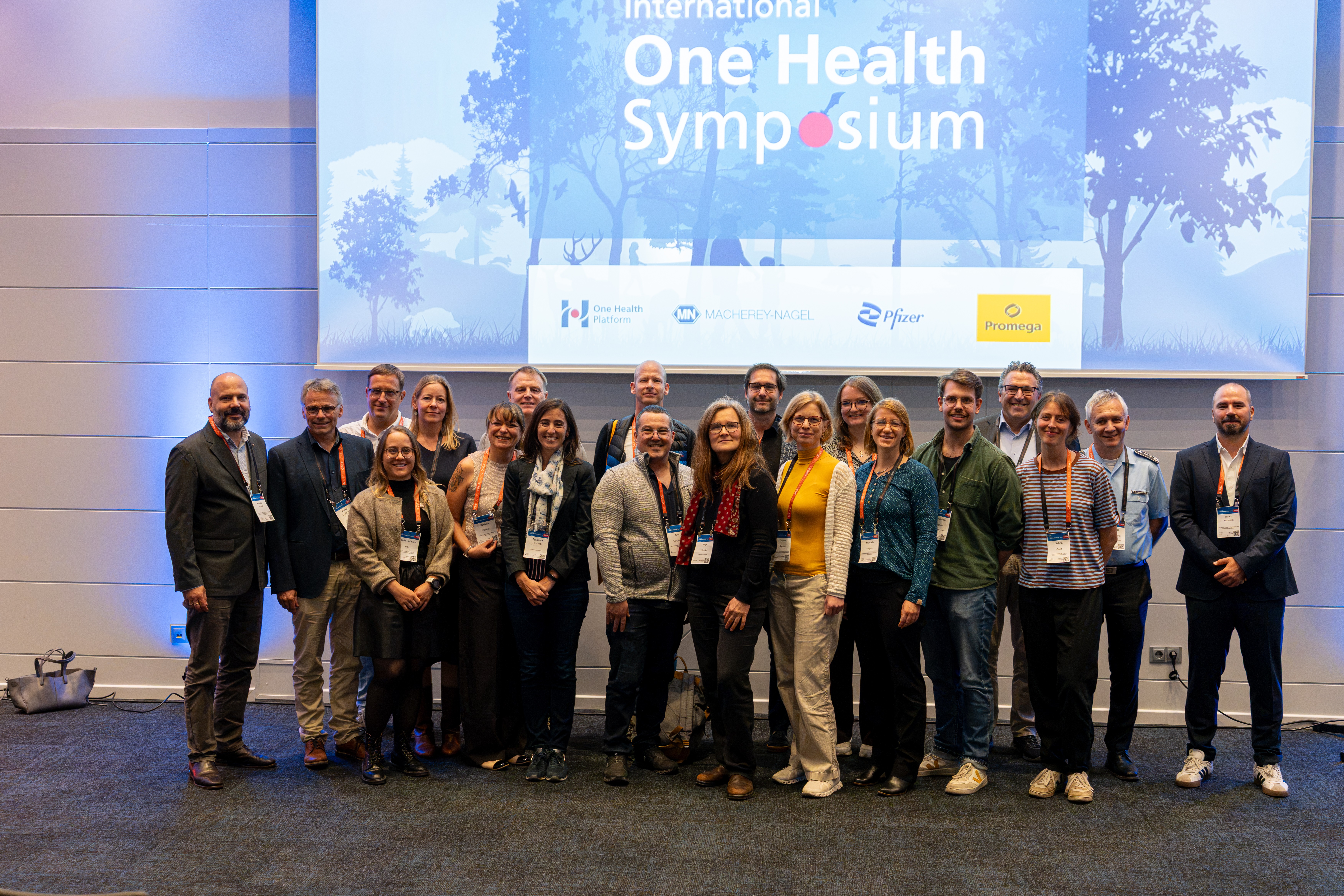
The Scientific Advisory Board 2027 was elected during the members assembly at the symposium in Berlin
Focus on wildlife health
The third day was enriched by two further keynote presentations. Carlos N. Ibarra-Cerdena shared research findings from Mexico on the impact of human activity on the health of wildlife, specifically bats and sea turtles. This highlighted just how diverse the effects of human activity on the environment are and how severely this can negatively impact the health of wildlife and, in the long term, that of humans themselves.
Social sciences and social participation – integral components of One Health
One field that is often still missing from the integration of One Health approaches is the social sciences. Monica Berger Gonzalez provided arguments for changing this as soon as possible in her impressive presentation on the integration of indigenous knowledge in the design of a risk assessment tool in Guatemala. She discussed why higher-quality data can be collected and why scientifically and socially more robust results can be achieved by involving communities in the design and implementation of One Health projects. Her work with indigenous communities in Guatemala also revealed that their indigenous knowledge already embodies the One Health concept. It has been embedded there for generations under the term ‘Jun Kawilal’. This example vividly demonstrates how important multicultural equality, as well as the inclusion and engagement of communities are for the successful implementation of One Health (see the OHHLEP One Health Definition),.
Poster awards for young South American researchers
Stephan Ludwig, Director of the Institute of Virology at the University of Münster and Site Manager of the OHP in Münster, concluded by thanking all participants for their valuable contributions, which had made the events such a success. Together with Fabian Leendertz, Director of the Helmholtz Institute for One Health and Site Manager of the OHP in Greifswald, and Sascha Knauf, he presented the poster awards, all of which went this year to travel grant recipients from South America (see Poster Award 2026).
The 2026 International One Health Symposium once again demonstrated just how valuable forums for interdisciplinary exchange are for the successful implementation of One Health. Perspectives from South America significantly enriched this year’s scientific exchange. Furthermore, the update on the Shamonda virus (for which a human infection has now been documented for the first time), the topics covered by the pandemic networks and numerous presentations at the symposium highlighted just how pressing the current issues in health research are – issues that can only be addressed through a One Health approach.
We would like to thank everyone who actively contributed to the success of the 2026 Symposium. Next year, the Symposium will take place in Berlin from 29 September to 1 October 2027. We look forward to building on this year’s success there. Hopefully with you too, so ‘Save the Date!’